
Large-scale solar photovoltaic (PV) installations and battery energy storage systems (BESS) are changing how modern grids function. These projects depend on one vital component: the solar inverter. It serves as the link between DC generation and AC grid supply. Solar inverters turn raw solar energy into practical electricity. They also work with batteries for load balancing and stability. In huge projects—think hundreds of megawatts—solar inverters in large-scale PV setups must manage tough grid codes, changing sunlight levels, and high-voltage work without losing reliability.
The solar inverter, with a dependable smart design, can provide steady performance in various settings. ZLPOWER’s engineering method stresses efficiency, grid support, and lasting strength—main factors that boost project returns in utility-scale solar inverters BESS applications.
.jpg)
In utility-scale PV plants, the inverter’s primary task is simple yet challenging: it converts high-power DC from PV arrays into matched AC power fit for grid injection. Central inverters lead in multi-megawatt sites. They offer cost savings and easier upkeep. Meanwhile, string or modular setups give options for rough landscapes or partial shading.
Current systems reach over 99% conversion efficiency in ideal conditions. Several MPPT trackers let each array part run at its top voltage-current spot. This holds true even when sunlight differs across panels. Such capability proves crucial for desert or coastal sites. There, dust or salt often causes uneven string output.
A common gigawatt-scale project may link dozens of 5 MW blocks. Each block uses central inverters to oversee thousands of modules. Modular builds ease growth and backups. If one unit breaks down, the rest continue smoothly. For builders aiming at lower LCOE and quicker startup times, these flexible inverter blocks prove vital.
Solar-plus-storage has become standard practice. Adding energy storage lets plants move generation peaks. It also steadies output and joins ancillary services markets. The setup varies by project aims:
|
Configuration |
Description |
Key Benefit |
|
DC-Coupled |
PV array and battery share a common DC bus before inversion |
Higher round-trip efficiency |
|
AC-Coupled |
Separate inverter paths for PV and storage connected at AC side |
Retrofit-friendly flexibility |
In both setups, solar inverters energy storage projects depend on two-way power flow handling. This means charging batteries during extra generation. It also involves releasing them when demand jumps or prices climb. Sophisticated control software allows smooth shifts between PV output, battery use, and grid sending. Issues like tripping or timing lags get avoided.
This setup aids peak shaving amid midday extras. It supports energy arbitrage in evening highs. When set up well, hybrid plants can offer “firm capacity.” This delivers assured output even in cloudy weather. Utilities now demand this feature more often.
As renewable use increases, old synchronous machines fade. This creates a demand for sharper electronics to hold stability. Utility-scale solar inverters BESS units now serve as active players in grid control. They go beyond just supplying power.
Essential features cover:
· Grid-forming and grid-following modes: allowing operation both with or without external voltage reference.
· Synthetic inertia & fast frequency response: stabilizing system frequency within milliseconds after disturbances.
· Voltage ride-through & reactive power compensation: preventing disconnections during voltage dips.
· Black-start capability: enabling isolated system restoration after outages.
These traits turn solar plants into lively resources. They can back weak grids or microgrids. In those places, standard generators often lack.
Picking the best inverter goes further than rated capacity. Developers check details like:
· Power block size (e.g., 3–5 MW per unit)
· Efficiency at partial loads
· Cooling design (liquid vs air)
· Environmental ratings (IP65+ for outdoor use)
· Communication protocols such as Modbus TCP/IP or IEC 61850 for SCADA integration
· Cybersecurity resilience
· Compliance with IEEE 1547 or UL standards
Oversizing ratios between PV arrays and inverter capacity usually fall from 1.1 to 1.3. This maximizes output without stressing parts. Upkeep access counts too. Remote spots gain from modular plans. There, parts swap out fast.
ZLPOWER’s UPS background helps here. Its advanced digital control tech, the DSP (Digital Signal Processor), ensures exact tracking and error handling. This works even with shifting loads.
ZLPOWER draws from long years in crafting tough power electronics. Shenzhen ZLPOWER Electronics Co., Ltd. stands as a national high-tech enterprise. It focuses on research, development, production, and sales of UPS power supply, Power Inverter, Solar inverter. The lineup includes hybrid types like the PVG series. These come with MPPT solar charge controller to boost and adjust DC power from the solar array. This base extends straight into bigger systems.
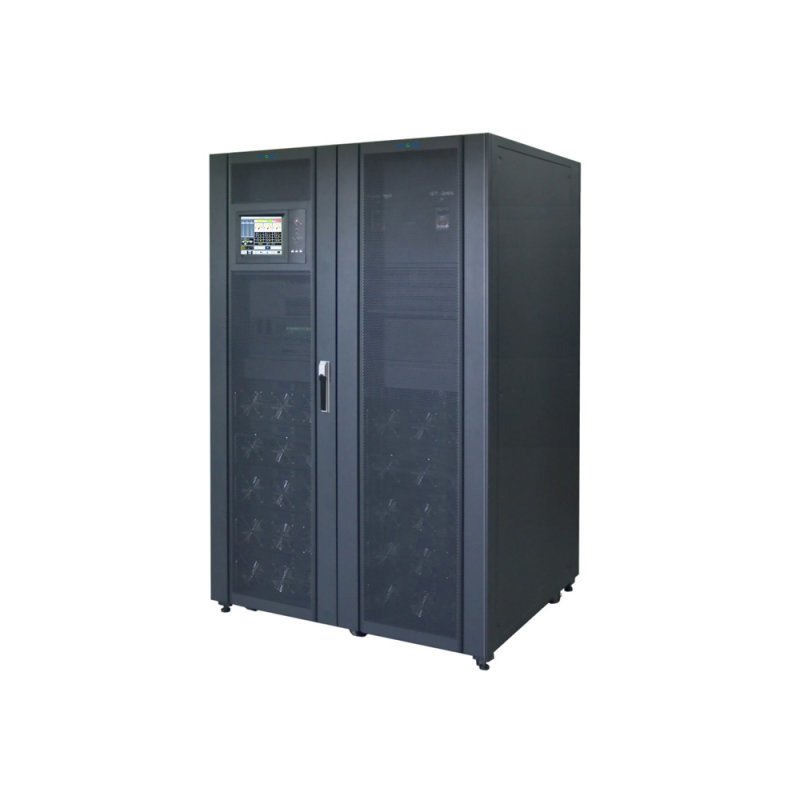
Main strengths feature:
· High conversion efficiency (>98%) with wide MPPT voltage range
· Intelligent monitoring via RS232/RS485/Modbus
· Integrated protection against overloads, surges, overheating
· Compatibility with lithium-ion or AGM batteries
· Remote diagnostics reducing site visits
ZLPOWER’s design idea highlights toughness. Its battery independency design enhances this inverter to operate without battery connected. This eases startup during staged building of hybrid sites.
When chosen and set right, strong solar inverters bring clear financial gains:
· Higher energy yield: multiple MPPTs cut mismatch losses by up to 3–5%.
· Reduced curtailment: smart control algorithms maintain export limits dynamically instead of shutting down entire strings.
· Enhanced revenue streams: participation in frequency regulation markets through BESS coordination adds new income layers.
· Lower O&M costs: predictive maintenance alerts prevent inverter overheat incidents before they escalate.
· Faster commissioning: pre-integrated communication interfaces minimize SCADA setup time by weeks.
For instance, a 100 MW hybrid plant using ZLPOWER central units hit over 99% uptime in its first year. This came from sturdy cooling geared for desert heat up to 50°C ambient. In one real case from a Middle East project, daily dust storms tested the units. Yet, they kept running without major halts, saving thousands in repair costs.
To ensure commercial solar inverters run well for decades:
1. Place units on shaded concrete pads with enough airflow space.
2. Improve DC cabling setup to cut voltage drop.
3. Add real-time monitoring dashboards reachable through cloud tools.
4. Plan preventive checks twice a year—clean filters, inspect connections.
5. Update firmware regularly. Modern control boards often get upgrades that improve error handling.
6. Train local staff on safe shutdown steps to skip needless stops.
Sticking to these actions not only stops usual problems like inverter tripping problems. It also stretches service life well past warranty terms.
Solar inverters stay as the hidden stars in every thriving renewable effort—calmly shifting electrons while keeping balance between sun-powered output and tricky grids. Their growth into clever managers allows adaptable ties with BESS assets. This redefines what “dispatchable” renewable energy means now.
ZLPOWER delivers tested solutions. They mix industrial strength with smart design rules shaped by years in power electronics advances. For developers focused on large-scale PV installations or hybrid storage systems requiring high-level reliability, this technology provides a consistent pathway toward operational stability and sustainable performance.
For inquiries or detailed technical specifications regarding specialized energy solutions, direct consultation with the ZLPOWER team offers tailored support for specific project requirements.
A: DC-coupled systems connect batteries directly on the DC side before inversion—ideal for new builds aiming at higher round-trip efficiency—while AC-coupled setups use separate converters tied at the AC bus, making them easier for retrofits or expansions without altering existing wiring.
A: They provide synthetic inertia, reactive power support, frequency regulation, and black-start capabilities that mimic traditional generators’ stabilizing effects while responding faster due to digital control loops embedded within DSP-based architectures.
A: Focus on rated efficiency across load ranges, IP65 protection level for outdoor deployment, communication compatibility (IEC 61850/Modbus), compliance certifications like UL1741 or IEEE1547, thermal management design preventing inverter overheat events, and ease of modular servicing.
A: Functions such as voltage ride-through compliance, reactive power compensation (VAR control), fast frequency response within sub-second intervals, grid-forming mode operation during islanded conditions, plus coordinated dispatch when coupled with BESS units are now standard expectations.
A: Selecting robust models reduces unplanned downtime costs while improving conversion efficiency; fewer replacements mean lower lifetime O&M expenses—which directly translates into reduced LCOE over a project’s 20-year horizon when compared to undersized or poorly matched equipment choices.
 ChatNow
 Vania
Vania